
Independência-Memórias is a platform dedicated to presenting historical research about Brazil’s bicentenary of independence, conducted by researchers from the Federal University of Sao Paulo (UNIFESP) and the University of Sao Paulo (USP). The website is divided into two parts corresponding to two projects: the Atlas project and the Index project.
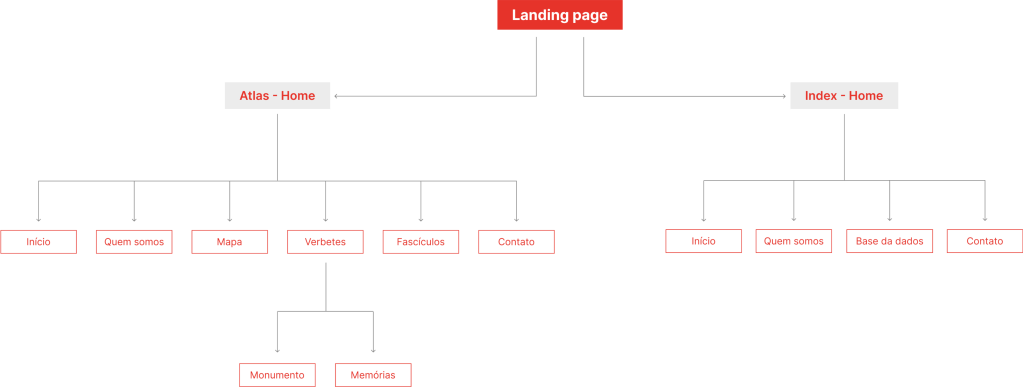
The Atlas project features a searchable map displaying streets, buildings, and monuments related to Brazil’s independence. Additionally, it includes entries about each capital and a section for textual information.
The Index project is a vast searchable database containing over fourteen thousand books, papers, dictionaries, academic dissertations, and other works covering the subject of independence.
Project Goal
Create a responsive website to accommodate this historical information and make it possible for all kinds of users to easily browse and find resources about both projects, Atlas and Index.
Project Duration
May 2022 – August 2022
Process
Sitemap
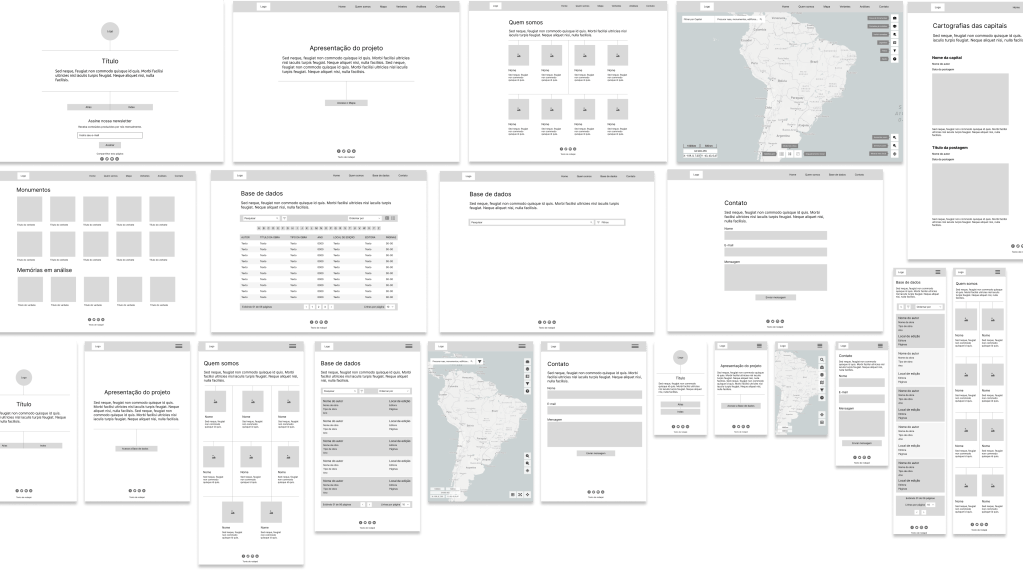
Wireframing
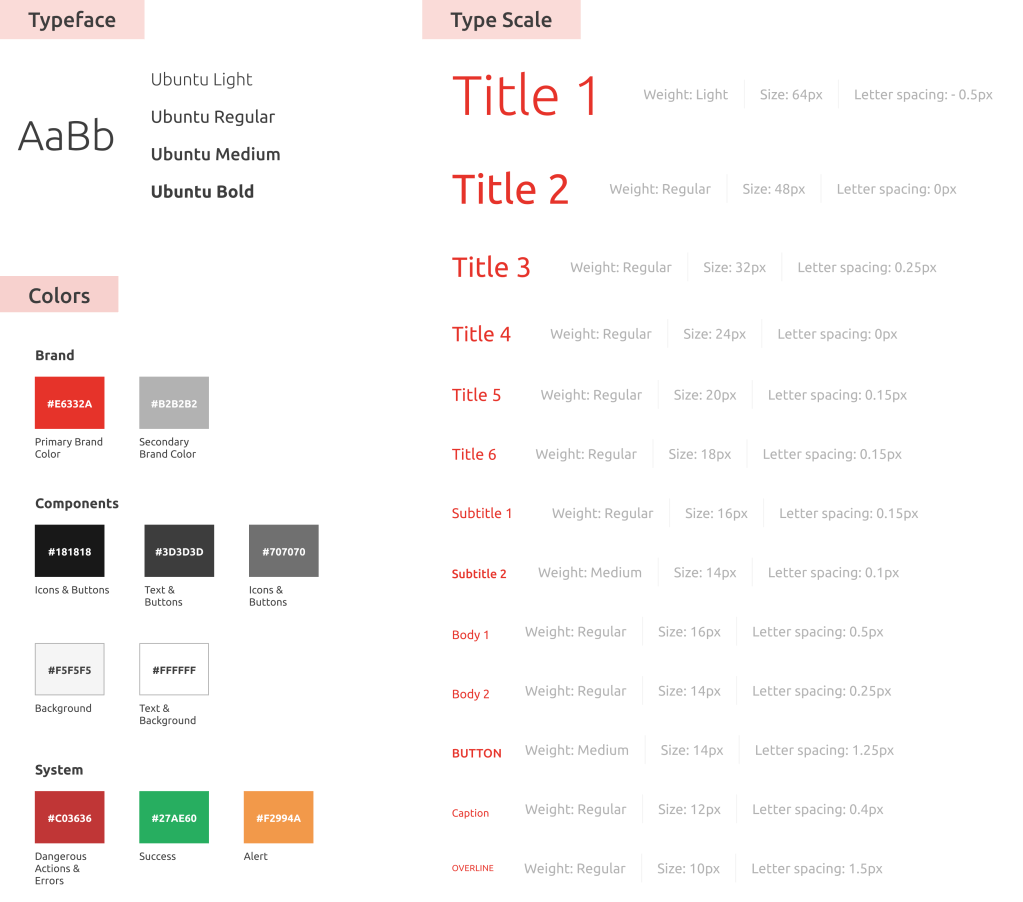
Style Guide
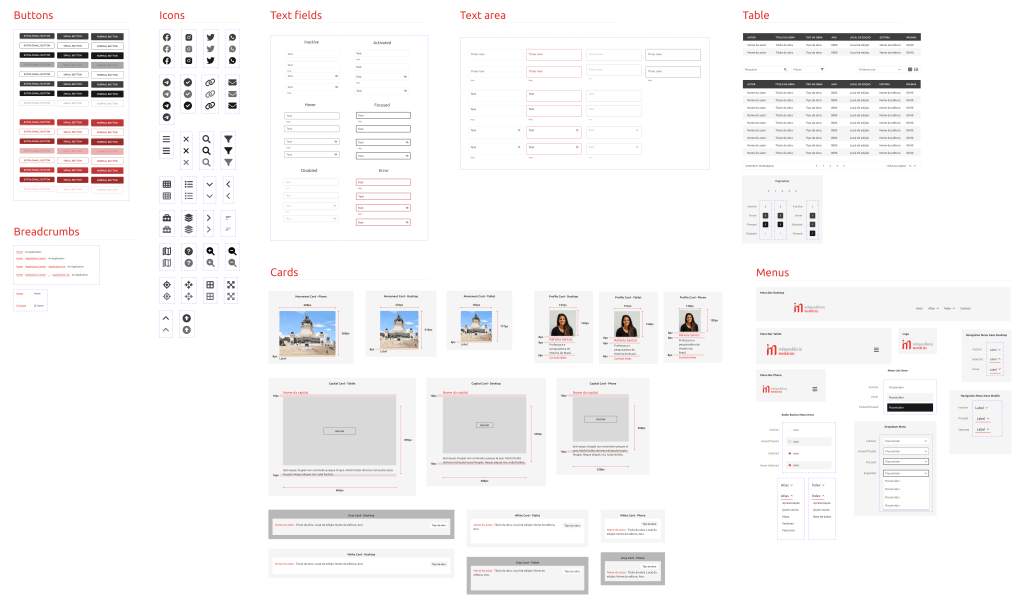
Components
Design decisions
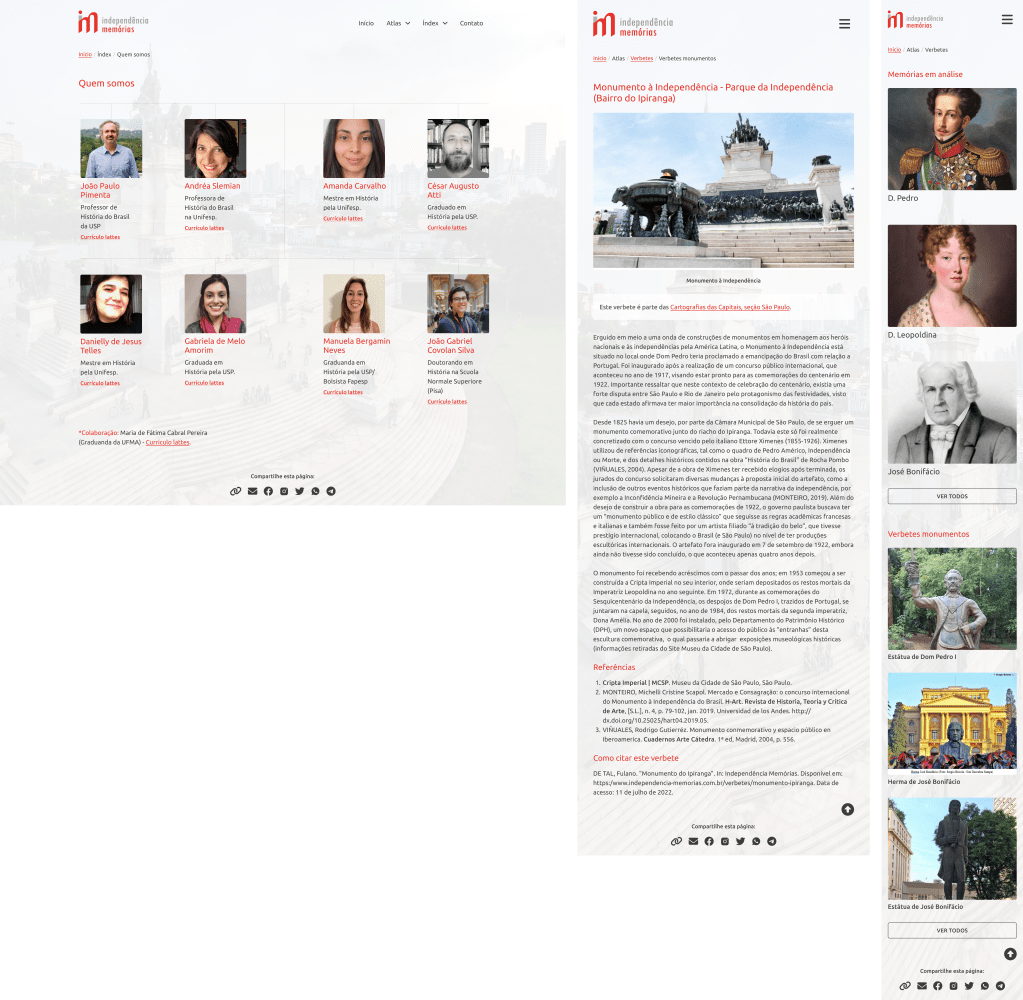
Decision 1
Minimalist visual design, focused on essential information and actions to avoid user distractions. Nielsen’s heuristic n.8: Minimalist aesthetics and design.
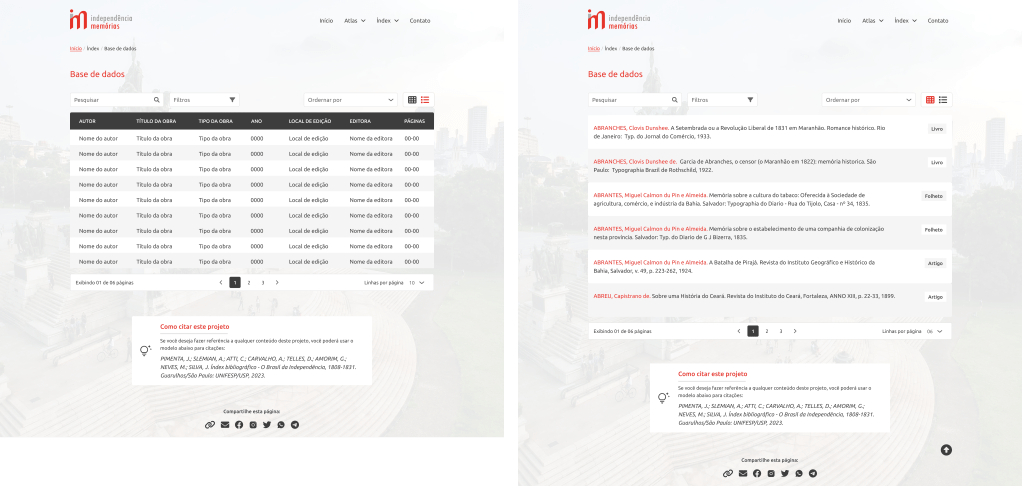
Decision 2
The search results in the database can be viewed as a list or as cards, giving the user more flexibility in use. Nielsen’s heuristic n.7: Flexibility and efficiency of use.
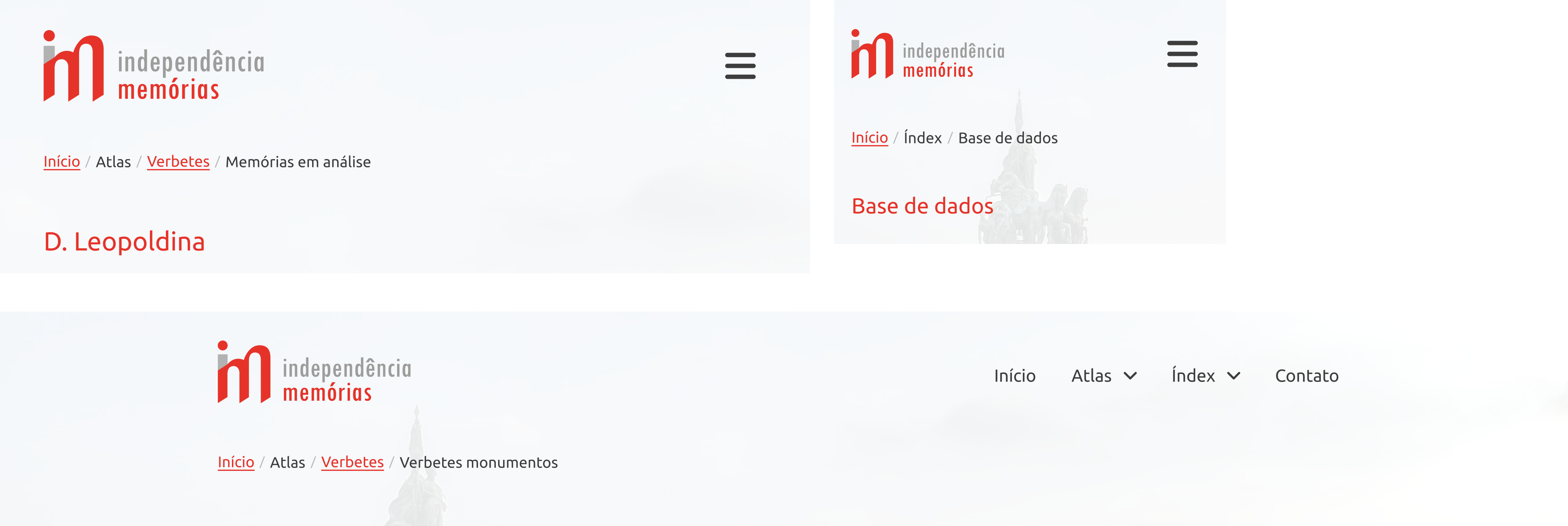
Decision 3
Breadcrumbs function as small maps, helping the user know where they are and where to go. Nielsen’s heuristic n.1: Visibility of system status.
Thoughts & Lessons Learned
This project involved more visual design than other stages of the UX process. The project was short, needed to be implemented quickly, and was funded by government resources. For instance, we didn’t have a phase for gathering user needs or creating personas. It doesn’t mean that I didn’t talk to stakeholders to understand who would be using the platform and for what purpose. All of that was done, but not in a conventional and detailed manner. The project, therefore, was shaped according to the stakeholders’ requirements rather than necessarily the users’ needs. It’s not the ideal world, but it’s the real world! It doesn’t mean the project will be bad because of this, but it wasn’t completely user-centered.
I worked on this project as a freelancer alongside a graphic designer who created the visual identity, and a developer who implemented the prototypes I designed. We didn’t have continuous contact during my work, so only after I completed the prototypes, there were some changes requested by the developer for the project to be coded and finalized. Changes in prototypes are normal, and working with an iterative process means getting used to it, but in this case, the changes came only at the end, causing unnecessary rework. It’s impossible to develop the project without both parties closely monitoring each other’s work, or the risk will be this rework and communication noise. In the case of this specific project, lack of synchronicity between both parties’ schedules, among other things, prevented us from following the process correctly. This can happen when dealing with freelance projects, so it’s essential to be more careful when assembling the team that will work on the project. However, despite these minor difficulties, the project was implemented on time and successfully.
Hi-Fi Prototypes
You can check the prototypes at this link! 😉
 aralito.com